
Structure
The Udalsarea 2030 organisational structure is made up of:
- Chair: Basque Government's Minister for Economic Development, Sustainability and the Environment, as chair of Ihobe.
- Technical Committee: Permanent working group consisting of up to two representatives of each member entity. It is the main communication forum of the network's activities and services. It establishes working groups to address different themes and guarantee its functioning.
- Local Action Coordination and Impetus Committee: Made up of representatives of the General Secretariat for the Social Transition and 2030 Agenda, of Ihobe and of other supramunicipal entities of the Basque Public Sector (Basque Government, public entities, Provincial Councils) signed up to the agreement.
- Technical Secretariat: Ihobe.
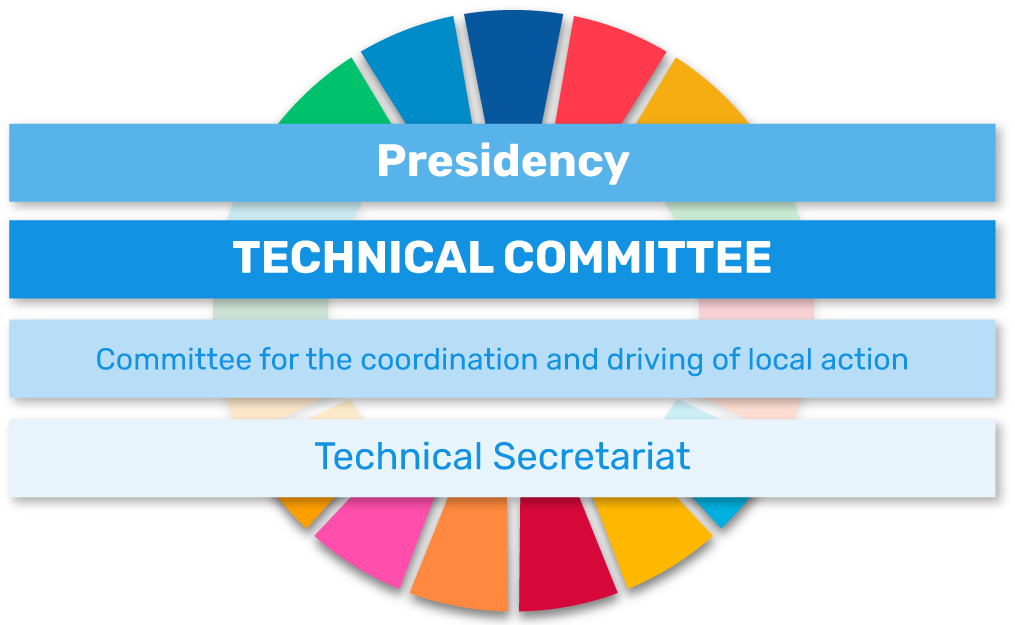
The functions of the bodies that make up the Udalsarea 2030 organisational structure are:
1. Presidency:
- Lead the network, approving strategic and management plans.
- Validate the accession of different interested entities to the Network.
- Provide the network’s Technical Secretariat with resources.
2. Technical Committee:
- Foster communication between different profiles of town councils and members and promote the exchange of experiences.
- Create specific working groups for the development of common network resources and materials.
- Participate in the design of the network’s strategic and management plans.
3. Committee for the coordination and driving of local action:
- Share information on projects, initiatives or support programmes in relation to local sustainability within its area of responsibility.
- Propose coordination lines for policies to encourage local action by each of the parties.
- Define and assume the leadership of sectoral initiatives aimed at local entities in order to improve the annual planning of the network’s activity and local action.
4. Technical Secretariat:
- Participate in the design of the network’s strategic and management plans and coordinate their implementation and monitoring, adapting the network’s services to the demands and needs of its members.
- Provide impetus and manage meetings of the different bodies and working groups.
- Represent the network technically in professional or technical forums related to sustainable local action.
- Strengthen and enter into alliances and collaboration with different networks and entities to exchange experiences and optimise the network’s activity.